


Student baggage shipping: Everything you need to know to save money
Student baggage shipping is usually the cheapest way to move your belongings to or from university abroad, but how much you pay depends on a few decisions you make early. When you book, whether you choose sea or air, how you pack and how well you document your boxes can change your bill by hundreds of pounds. This guide covers what you need to know to save money, from booking times and freight choices to what happens if your shipment goes missing or is delayed.
| from £180 one suitcase by sea |
from £290 three to five boxes by sea |
8 to 12 weeks book ahead for Australia |
same day quote from an inventory |
Checked October 2026. All prices are indicative “from” figures for door to door shipping and are confirmed when you book. Airline fees and customs rules change often, so check the latest position before you travel.
What student baggage shipping costs
Shipping is priced by the volume of your shipment, door to door, and the price is fixed when you book. Here is a guide to typical student loads.
| Shipment | Approximate volume | Sea freight from | Air freight from |
|---|---|---|---|
| One suitcase | Up to 23kg | around £180 | around £320 |
| Three to five boxes | around 0.5 cubic metres | around £290 | Quoted on request |
| Small flat contents | around 1 cubic metre | around £550 | Quoted on request |
Compare that with airline excess fees of typically £60 to £120 per bag, per leg, and a 23kg case paid for at the check-in desk that can pass £400 on long haul. Once you are sending two or more bags, shipping usually works out cheaper.
How far in advance to book your student shipment
Booking early is the single biggest saving. Sea freight is far cheaper than air, but it needs time. If you leave it late, you may have no choice but to pay for air freight or airline excess.
| Destination | Sea freight transit | Book sea freight | Book air freight |
|---|---|---|---|
| Europe | 2 to 4 weeks | 2 to 4 weeks ahead | 2 to 3 weeks ahead |
| Asia and the Middle East | 4 to 8 weeks | 4 to 8 weeks ahead | 2 to 3 weeks ahead |
| USA and Canada | 5 to 9 weeks | 4 to 8 weeks ahead | 2 to 3 weeks ahead |
| Australia and New Zealand | 8 to 12 weeks | 8 to 12 weeks ahead | 2 to 3 weeks ahead |
If your term starts in late September and you are heading to Australia or New Zealand, aim to book in June. Summer is the busiest time for student moves, so collection slots fill quickly. Booking early also gives you time to sort out the paperwork without rushing.
Sea freight or air freight for students?
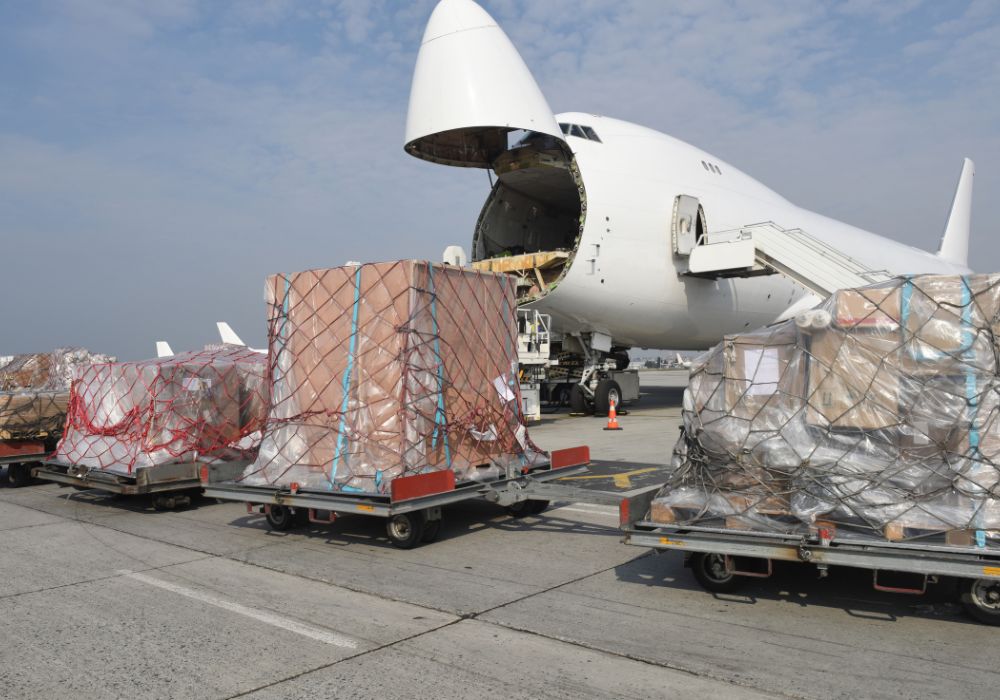
Most students use sea freight for the bulk of their belongings and keep air freight for anything urgent.
| Sea freight | Air freight | |
|---|---|---|
| Cost | Cheapest, from around £180 for a suitcase | Higher, from around £320 for a suitcase |
| Transit | 2 to 12 weeks depending on destination | 3 to 10 days door to door |
| Best for | Clothes, bedding, books, kitchen items | Study essentials and items you need in week one |
| Booking notice | 2 to 12 weeks | 2 to 3 weeks |
| How it travels | Groupage, sharing container space with other consignments | On a cargo or passenger flight |
A common approach is to fly with a week or two of clothes and your laptop, send one suitcase by air if you need it quickly, and ship everything else by sea so it arrives soon after term starts.
| Pros of sea freight | Cons of sea freight |
|---|---|
| Lowest cost per cubic metre | Needs weeks of notice |
| Good for heavy items like books | Arrives after you in most cases |
| Plenty of room for bulky bedding | Delays at ports can add days |
What happens if your shipment goes missing or is delayed?
Lost shipments are rare, but delays do happen, especially by sea. Knowing what protects you before you ship saves stress later.
Tracking
Your shipment has a reference number from booking. You can ask for updates at each stage: collection, export, departure, arrival, customs clearance and delivery. Keep your reference and contact details somewhere you can find them easily.
Inventory
Number every box and list its contents. Your inventory is the record customs uses, and it is also the evidence you need if a box is damaged or goes missing. Take photos of each packed box before collection.
Insurance
Transit insurance covers your goods against loss or damage while they are moving. It is usually offered as an option when you book. Check what it covers, whether owner packed boxes have limits, and how the excess works. Value your items realistically: second hand clothes and books are worth less than their original price.
Claims
If something goes wrong:
- Check every box on delivery and note any visible damage on the delivery paperwork.
- Take photos straight away.
- Contact your shipping provider as soon as possible, using your reference number.
- Submit your claim within the time limit stated in your insurance terms, with your inventory and photos.
Common causes of delay
- Customs inspections or missing paperwork.
- Port congestion or vessel schedule changes.
- Biosecurity checks in Australia and New Zealand.
- No one available to receive the delivery.
Customs rules differ by country. For your destination, check the official source, such as the Australian Border Force, New Zealand Customs Service, Canada Border Services Agency or U.S. Customs and Border Protection. Students coming to the UK can check student relief on GOV.UK.
This is general guidance and not legal advice.
What to ship and what to leave behind
Shipping costs are based on volume, so every item should earn its place. A simple rule: ship what is expensive or hard to replace, and buy cheap, bulky items when you arrive.
| Usually worth shipping | Usually better to buy locally |
|---|---|
| Winter coats, boots and good quality clothes | Cheap hangers, bins and storage boxes |
| Textbooks and course notes you will use again | Basic kitchen utensils and crockery |
| Bedding you already own, vacuum packed | Toiletries and cleaning products |
| Sports kit, instruments and hobby gear | Lamps and small electricals with UK plugs |
| Photos and personal items | Food and drink, which is often restricted |
Plug types and voltages differ between countries, so check before shipping electricals. Never pack your passport, visa documents, laptop or medication. Keep those in your hand luggage.
The cheapest student shipment is the one booked early, packed tightly and documented properly.
Ten ways to save money on student baggage shipping
- Book sea freight as early as you can.
- Use the right box size. Books go in small boxes, clothes in medium, duvets in large.
- Fill every gap, because you pay for volume, empty space included.
- Vacuum pack bedding and winter clothes.
- Sell or donate things that are cheap to replace at your destination.
- Share a shipment with a sibling or friend going to the same city, if your provider allows it.
- Avoid paying for airline excess at the desk. Prepay or ship instead.
- Keep each box to around 30kg or less so it travels safely.
- Make a full inventory to avoid customs delays and storage charges.
- Plan the return leg early instead of paying peak rates at the end of term.
See our shipping boxes page for sizes, and our guide to what students should and should not ship.
Frequently asked questions
1. What is the cheapest way to ship student baggage?
Sea freight is usually the cheapest, from around £180 for a suitcase door to door.
2. How far in advance should I book student shipping?
Book sea freight 8 to 12 weeks ahead for Australia and New Zealand, 4 to 8 weeks for Asia or North America, and 2 to 4 weeks for Europe. Air freight needs 2 to 3 weeks.
3. Is sea or air freight better for students?
Sea freight suits most belongings. Air freight suits a small amount you need quickly.
4. How long does student baggage shipping take?
Air freight takes around 3 to 10 days. Sea freight takes 2 to 12 weeks, depending on the destination.
5. Can I track my student shipment?
Yes. You receive a reference number and can ask for updates at each stage of the move.
6. What if my shipment is delayed?
Most delays are caused by customs, ports or delivery access. Keep your paperwork complete and stay in touch with your provider.
7. Do I need insurance for student shipping?
It is optional but recommended. Check what it covers and how owner packed boxes are treated.
8. How do I make a claim?
Note damage on delivery, take photos, and contact your provider with your inventory within the time limit in your policy.
9. Can I ship from university halls?
Yes. Collection is available from any UK address, including halls and student flats.
10. Can I ship my belongings home after my course?
Yes. The service runs in reverse, so you can ship home or onward after graduation.
Get a quote for your student shipment
Get a fixed door to door price for student shipping, explore baggage shipping, or read our guide to excess baggage for students. Heading to Australia? See baggage shipping to Australia. Request a quote or call 020 8965 1234.

