


USA Visa Options for UK Citizens: How to Move Legally in 2026
UK citizens have nine main routes to live, work, or settle in the USA in 2026: the ESTA visa waiver for short visits, the E-2 treaty investor visa, the L-1 intracompany transfer, the H-1B specialty occupation visa, the O-1 extraordinary ability visa, the EB-5 investor green card, family-sponsored green cards, employer-sponsored green cards, and the diversity visa lottery. Each has different eligibility rules, different costs, different processing times, and different paths (or no path) to permanent residency. The right visa for you depends on whether you have a US employer sponsor, whether you have capital to invest, whether you have a US citizen family member, and how long you want to stay.
This guide walks through every route in detail, including the ESTA point of contact process that catches most first-time travellers off guard, and shows you how to identify the right visa for your situation.
The ESTA visa waiver: What it is and what it is not
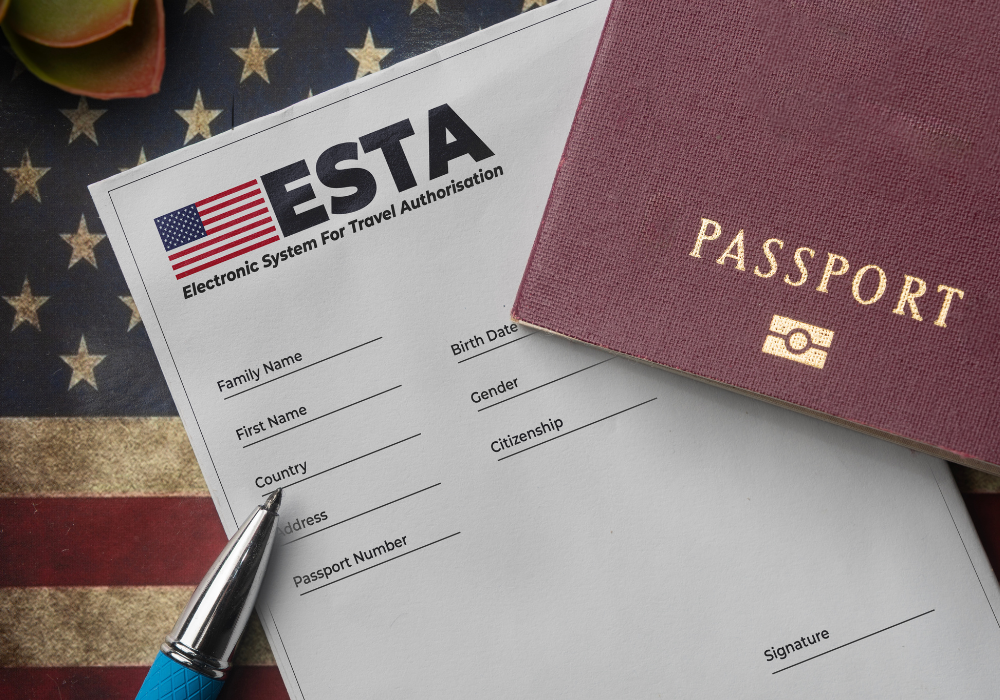
The ESTA (Electronic System for Travel Authorization) lets UK citizens visit the USA for up to 90 days at a time without a traditional visa. It costs $21 (around £17), takes 72 hours to process in most cases, and is valid for two years from the date of approval.
ESTA is for tourism, short business meetings, conferences, and family visits. You cannot:
- Work for a US employer
- Run a US business actively
- Study at a US institution
- Settle permanently
- Stay beyond 90 days at a time
US Customs and Border Protection officers regularly turn back travellers who attempt to live in the USA on rolling ESTA visits. Spending six months in the USA, leaving for a week, and returning for another six months is a pattern that triggers refusal at the border. If you intend to relocate, you need a proper visa.
ESTA point of contact process
When you complete an ESTA application, you must list a US point of contact. This is the part most first-time travellers find confusing. The point of contact is not a sponsor or a guarantor. It is simply someone in the USA the authorities can contact if needed during your stay.
Acceptable points of contact include:
- A friend or family member resident in the USA
- A hotel or accommodation provider
- A US business contact for business travel
- The US office of your UK employer
If you genuinely do not know anyone in the USA and have not yet booked accommodation, you can list “Unknown” in the relevant fields. This will not automatically reject your application, though it may trigger additional review.
Your point of contact does not need to know they have been listed, and they take on no legal responsibility. They are an information field, not a sponsor.
E-2 Treaty Investor Visa
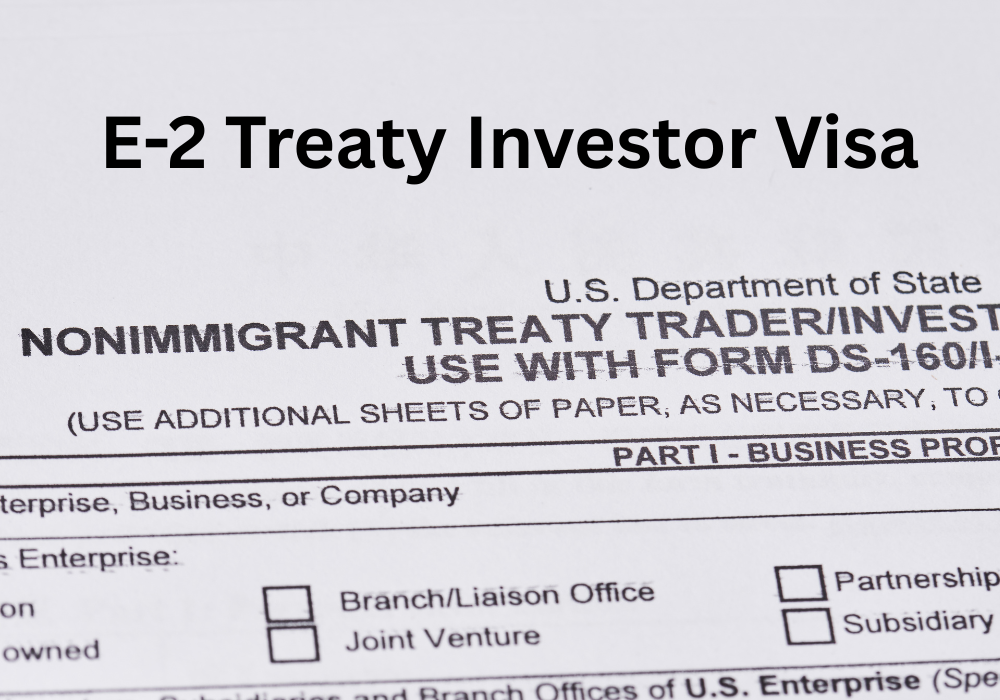
The E-2 visa is one of the most popular routes for UK citizens with capital who want to live and work in the USA long-term. The UK and USA have a treaty that makes UK citizens eligible.
- Who qualifies: UK citizens investing a substantial amount (typically $100,000 or more) into a US business they actively manage. The business must be real, operational, and capable of supporting more than just the investor and their family.
- Cost: Application fees of around £350. Legal fees typically £4,000 to £8,000 for the application. Plus the investment itself.
- Duration: Initial visa for up to five years, renewable indefinitely while the business operates. Spouses can work freely on an E-2 dependant visa. Children can attend school but cannot work after age 21.
- Path to a green card: No direct path. The E-2 is non-immigrant, meaning you can renew it forever but it does not lead to permanent residency. Many E-2 holders eventually transition to EB-5 or other immigrant categories.
- Best for: Entrepreneurs and small business owners who want to run a US business hands-on, where the business case is genuine and not just an immigration vehicle.
L-1 Intracompany Transfer Visa
The L-1 is the route used by most multinational employees moving from a UK office to a US office of the same company.
- L-1A (managers and executives): Up to seven years total. Direct path to a green card through the EB-1C category, which is one of the fastest green card routes available.
- L-1B (specialised knowledge employees): Up to five years total. Path to a green card is possible but typically through the slower EB-2 or EB-3 categories.
- Who qualifies: Employees who have worked for the UK parent company, subsidiary, or affiliate for at least one continuous year in the past three years, in a managerial, executive, or specialised knowledge role, transferring to a US entity of the same company.
- Cost: Petition fees of around $5,000 to $7,000 (usually paid by the employer). Legal fees typically $5,000 to $10,000.
- Duration: Initial visa for one to three years, renewable to the maximum (five or seven years depending on category). Spouses can work freely on L-2 dependant visas.
- Path to a green card: L-1A holders can apply for an EB-1C green card, often within the first two to three years of arrival. L-1B holders typically apply through EB-2 or EB-3 categories, which take longer.
- Best for: Mid-career and senior professionals already employed by a multinational company with a US presence.
H-1B Specialty Occupation Visa

The H-1B is the main employer-sponsored work visa for professionals in roles that require a degree.
- Who qualifies: Professionals in roles that require at least a bachelor’s degree (or equivalent experience) in a specialised field. Common H-1B occupations include software engineers, data scientists, doctors, accountants, architects, lawyers, and academics.
- The lottery: H-1B has an annual cap of 85,000 visas. Each March, US employers register candidates in a lottery. Selection rates in recent years have run between 14 and 30 per cent depending on registration volume. If your registration is selected, your employer files a full petition between April and June, and you can start work in the USA from October.
- Cost: Petition and registration fees total around $4,000 to $6,000, usually paid by the employer. Legal fees typically $3,000 to $6,000.
- Duration: Three years initially, renewable to six years. Extensions beyond six years are possible if a green card application is in progress.
- Path to a green card: Common. Most H-1B holders pursue an EB-2 or EB-3 employer-sponsored green card during their H-1B period.
- Best for: Professionals with a job offer from a US employer willing to sponsor, particularly in technology, healthcare, finance, and academia.
O-1 Extraordinary Ability Visa

The O-1 is a less well-known but increasingly used route for UK citizens with documented expertise in their field.
- Who qualifies: Individuals with extraordinary ability in sciences, arts, education, business, athletics, or extraordinary achievement in motion pictures or television. The bar is genuinely high but not as exclusive as the name suggests. Successful applicants typically demonstrate three of: major awards or prizes, published work in major media, original contributions of major significance, judging the work of others in the field, employment in a critical capacity, or commanding a high salary.
- Cost: Petition fees of around $2,000 to $3,000. Legal fees typically $5,000 to $10,000 because the documentation requirement is heavy.
- Duration: Three years initially, renewable in one-year increments indefinitely.
- Path to a green card: Yes, through the EB-1A extraordinary ability green card, which is one of the fastest routes available.
- Best for: Senior professionals, researchers, founders, artists, athletes, and journalists who can document significant achievement in their field.
EB-5 Investor Green Card
The EB-5 gives direct permanent residency to investors making a substantial investment in a US business.
- Who qualifies: Investors placing $800,000 into a business in a Targeted Employment Area (rural or high-unemployment regions), or $1,050,000 into a business elsewhere. The investment must create or preserve at least ten full-time jobs for US workers.
- Cost: Government filing fees of around $11,160 plus legal fees typically $25,000 to $50,000. Plus the investment itself, which must be at risk and cannot be a loan or refundable.
- Duration: Two-year conditional green card initially, then permanent green card after demonstrating the investment and job creation requirements have been met.
- Path to a green card: Direct. EB-5 is itself a green card route.
- Best for: High-net-worth individuals who want permanent US residency and have capital to deploy. Many EB-5 investors use Regional Centre projects, where their investment is pooled with other investors into pre-approved development projects rather than running a business themselves.
Family-sponsored green cards
If you have a US citizen or permanent resident family member, family sponsorship is usually the most straightforward route.
- Spouse of a US citizen (CR-1 or IR-1): 12 to 18 months from filing. Most common family route.
- Parent of an adult US citizen (IR-5): 12 to 18 months from filing.
- Child of a US citizen (IR-2 if under 21, F1 if over 21): Under-21 child of a US citizen typically takes 12 to 18 months. Adult unmarried child takes seven to ten years because of annual quotas.
- Sibling of a US citizen (F4): 12 to 15 years because of severe quota backlogs.
- Spouse or unmarried child of a permanent resident (F2A): Two to three years.
- Cost: Filing fees of $1,200 to $1,800. Legal fees optional but typically $3,000 to $6,000 if used.
Family green cards lead directly to permanent residency, with citizenship eligibility three years after green card approval for spouses of US citizens, or five years for other categories.
Employer-sponsored green cards (EB-1, EB-2, EB-3)
Most non-family green cards come through employer sponsorship in one of three categories.
- EB-1 (priority workers): Extraordinary ability (EB-1A, no employer sponsor required), outstanding professors and researchers (EB-1B), and multinational executives and managers (EB-1C, the route for many L-1A holders). Typically 12 to 24 months for UK citizens.
- EB-2 (advanced degree professionals): Roles requiring a master’s degree or equivalent. Most common green card category for technology and healthcare professionals. Currently 12 to 30 months for UK citizens.
- EB-3 (skilled workers): Roles requiring at least two years of experience or training. Slower than EB-2, typically 24 to 36 months for UK citizens.
UK citizens generally face shorter waits than applicants from India or China because per-country quotas apply.
Diversity Visa Lottery
The Diversity Visa programme allocates 55,000 green cards per year to citizens of countries with low US immigration rates. The UK is included in most years.
- Cost: Free to enter. Government fees only payable if selected.
- Process: Online entry between October and November each year. Random selection in May. Selected entrants then complete the full immigration process.
- Odds: Around 1 in 100 for UK entrants in recent years.
The Diversity Visa is worth entering as a free additional option, even if it is not your primary route. Selection is random and unconnected to your other applications.
Moving from the UK to the United States is a major undertaking. Whether you are heading to New York, Los Angeles, Chicago, Miami, Dallas, Houston, San Francisco, or beyond, Anglo Pacific will help you manage the entire removal from your UK home to your American address. We handle everything, so you can concentrate on the move itself rather than the logistics behind it. Learn more about removals to USA here.
Choosing the right visa for your situation
Three questions usually narrow the choice.
- Do you have a US employer sponsor? If yes, L-1, H-1B, or O-1 are likely the best routes. If no, the employment-based routes are not available to you.
- Do you have substantial investment capital? If yes ($100,000+), E-2 is the simplest route. If you have $800,000+ and want direct permanent residency, EB-5 is direct.
- Do you have US citizen family? If yes, family sponsorship is usually the fastest and cheapest route, particularly for spouses.
If none of those apply, your realistic options are: building toward an O-1 if your career achievements support it, applying for the Diversity Visa lottery each year, or pursuing self-funded study at a US institution and seeking employer sponsorship after graduation.
What about the Visa Waiver Programme for relocation?

We are asked this often, so it is worth being explicit. The ESTA visa waiver is not a relocation route. You cannot legally live in the USA on a series of ESTA visits, and the US Customs and Border Protection officers at every US airport are trained to identify this pattern.
If you arrive on an ESTA with all your possessions, having quit your UK job, with no return flight booked, you will likely be denied entry and put on the next flight back. This is a more common refusal scenario than most people realise.
For any genuine relocation, you need one of the visas covered above.
Common mistakes UK applicants make
Underestimating processing times. Most US visa routes take six months to two years from start to approval. Build this into your move timeline.
Failing to evidence ties to the UK on non-immigrant visa applications. For B-1/B-2 business and tourist visas, you must demonstrate strong ties (job, property, family) that show you intend to return to the UK. Weak evidence here is the most common refusal reason.
Misunderstanding dual intent. H-1B and L-1 visas allow “dual intent,” meaning you can hold them while applying for a green card. E-2 visas do not allow dual intent in the same way, which is why many E-2 holders never directly apply for green cards.
DIY-ing complex applications. ESTA you can do yourself. E-2, EB-5, and any green card route benefit substantially from immigration legal support. The cost of legal fees is small compared to the cost of refusal and reapplication.
Planning your UK to USA move
Once your visa is in progress, planning the physical move can begin. Anglo Pacific has been moving British families to the USA since 1978. Our team handles the full international removal from your UK home to your US destination, with origin packing, customs clearance, and door-to-door delivery.
Our timing aligns naturally with the visa process. Most clients book their UK survey and quote eight to twelve weeks before their planned travel date, with final packing scheduled once visa approval is confirmed.
Get a free, no-obligation quote at our USA international shipping page or USA international removals page.
Read our guide: Moving to America from the UK: The Complete 2026 Guide
Frequently Asked Questions
1. How long does it take to get a US visa from the UK?
It depends on the visa. ESTA takes 72 hours. E-2 and L-1 visas typically take three to six months. H-1B is tied to the annual lottery cycle, with successful applicants able to start work in October. EB-5 takes 18 months to four years. Family green cards take 12 months for immediate relatives of US citizens, longer for other categories.
2. Can I work in the USA on an ESTA?
No. ESTA is for tourism, short business meetings, conferences, and family visits only. Working on an ESTA is illegal and will result in being barred from future US entry.
3. Do I need a lawyer for a US visa application?
For ESTA, no. For E-2, L-1, H-1B, O-1, EB-5, or any green card route, a US immigration lawyer is strongly recommended. The cost of legal fees is small relative to the cost of refusal and reapplication.
4. What is the easiest US visa for UK citizens?
If you have a US citizen spouse, the CR-1 or IR-1 spousal green card is the most straightforward route, with high approval rates and a 12 to 18-month timeline. For other applicants, the L-1 visa (if your employer has a US office) is generally the simplest employment route.
5. Can I bring my family on my US visa?
Yes, all the work visas above (E-2, L-1, H-1B, O-1) allow your spouse and unmarried children under 21 to come with you on dependant visas. Spouses on E-2, L-1, and O-1 dependant visas can work; H-1B spouses can work only in specific circumstances.
6. Can I apply for multiple visa categories at once?
Yes. Many UK applicants apply for multiple routes in parallel, particularly entering the Diversity Visa lottery while pursuing employment or investor routes.


