


Moving to Europe from the UK: The complete 2026 guide
Europe remains the most popular destination block for UK nationals relocating abroad. Whether you are planning a retirement in the Mediterranean sun, a career move to a global financial hub, or a lifestyle change somewhere more affordable than Britain, the options are genuinely varied. This guide compares the eight most popular European destinations for UK expats, covering the honest pros and cons of each, the best cities to consider, and the practical groundwork you need to lay before you commit.
Europe by the numbers
| UK nationals living in EU countries | ~1.2 million (ONS estimate) |
| Most popular EU destination by registered residents | Spain (~300,000) |
| Countries where Anglo Pacific ships to in Europe | 30+ |
| Typical road freight transit, UK to Southern Europe | 5 to 10 days |
| Average cost of living, Southern Europe vs UK | 25 to 40% lower |
| Schengen countries UK nationals can visit visa-free | 27 (up to 90 days in any 180-day period) |
Post-Brexit basics (before you book anything)
The single most important thing to understand before choosing a European destination is that UK nationals no longer have the automatic right to live and work anywhere in the EU. What applies to you depends on which country you choose, why you are moving, and how long you plan to stay.
- The 90/180 day rule applies across the Schengen area: UK passport holders can stay up to 90 days in any 180-day period without a visa. This covers tourism and short visits, not residency.
- To live anywhere in Europe long-term, you need a national visa or residency permit. There is no single EU-wide residency route for UK nationals.
- Switzerland and Cyprus both operate outside the Schengen area and have their own separate entry and residency rules.
- The most common residency routes for UK expats are: retirement or passive income visa, skilled worker permit, self-employment or freelancer visa, and golden or investment visa.
- Portugal, Malta, and Cyprus have historically been more accessible for UK nationals than France or Germany, due to more streamlined passive income and residency pathways.
- Always consult a licensed immigration lawyer registered in your destination country before making any financial commitments. This guide does not constitute immigration advice.
Country-by-country: where to move in Europe from the UK
Each destination below follows the same format: a one-line overview of who it suits best, two honest pros, two honest cons, and the best cities and areas for UK expats. For the full picture on each country, follow the link to the dedicated guide.

1. Cyprus
Best for: retirees, remote workers, British expats seeking familiarity
Pros
- English is widely spoken and the British legal heritage makes administrative processes familiar; Cyprus is also outside Schengen, giving UK nationals a different and often more accessible residency route than mainland EU countries.
- Year-round Mediterranean climate, a well-established British expat community, and a cost of living that is meaningfully lower than most of Western Europe.
Cons
- The job market outside Nicosia and the tourism sector is limited, making Cyprus a stronger fit for retirees and remote workers than those seeking local employment.
- Public healthcare quality varies across the island; private health insurance is strongly recommended for all UK expats.
Best cities and areas for UK expats
- Limassol: largest expat population, modern amenities, international schools, active social scene
- Paphos: popular with retirees, large British community, relaxed pace of life
- Nicosia: capital, best local job market, less of a coastal feel
Read our guide: Moving to Cyprus from the UK: Your 2026 Relocation Guide

2. Malta
Best for: retirees, non-dom tax planning, anyone wanting English as a daily language
Pros
- English is an official language and EU membership means accessible residency pathways; the Malta Residence and Visa Programme offers favourable tax treatment for qualifying UK nationals.
- Very high sunshine hours, low crime, and a strong sense of British cultural familiarity, including driving on the left and widely available British goods.
Cons
- Malta is a small island and the limited physical space, combined with rapid population growth, puts real pressure on housing costs and traffic in popular areas.
- The public health system has waiting times; private health cover is advisable for anything beyond routine care.
Best cities and areas for UK expats
- Sliema and St Julian’s: most cosmopolitan, popular with working-age expats, close to Valletta
- Valletta: capital, culturally rich, smaller residential market
- Gozo: quieter, lower cost, suits those seeking a genuine lifestyle change

3. Switzerland
Best for: professionals, high earners, families prioritising quality of life above cost
Pros
- Consistently ranked among the world’s highest quality-of-life countries, with excellent public services, very low crime, and a strong international job market in finance, pharma, and technology.
- Switzerland is not in the EU, so post-Brexit rules differ from Schengen EU countries and in some respects are more straightforward for UK nationals to navigate.
Cons
- The cost of living is among the highest in Europe; housing in Zurich and Geneva is expensive and competitive, and day-to-day costs will be a significant adjustment for most UK movers.
- Work permits are required for employment and employer sponsorship is usually necessary; the process takes time and is not guaranteed.
Best cities and areas for UK expats
- Zurich: financial hub, largest international community, best transport links
- Geneva: home to major international organisations, high salaries, French-speaking
- Basel: pharma hub, sits on the French and German borders, slightly more affordable
- Bern: federal capital, quieter pace, more accessible housing market
Read our guide: Moving to Switzerland from the UK: Your 2026 Relocation Guide

4. Portugal
Best for: retirees, remote workers, lifestyle movers on a mid-range budget
Pros
- A low cost of living relative to the UK, warm climate particularly in the Algarve and Lisbon regions, and English widely spoken in cities and tourist areas make it one of the most accessible European moves for UK nationals.
- The D7 passive income visa and NHR tax scheme remain open to UK nationals and have made Portugal a consistently popular choice for retirees and those with location-independent income.
Cons
- Property prices in Lisbon and Porto have risen significantly since 2019 and the affordable Portugal of a decade ago no longer applies in major urban centres.
- Residency bureaucracy can be slow; plan for longer processing times than official guidance suggests and factor this into your timeline.
Best cities and areas for UK expats
- Lisbon: capital, cosmopolitan, strong international community, good transport connections
- Porto: smaller and more affordable than Lisbon, excellent food and culture scene
- Algarve (Faro, Lagos, Albufeira): top retirement corridor, large and established British community
- Cascais: coastal, affluent, popular with families and remote workers near Lisbon
Read our guide: Moving to Portugal from the UK: Your 2026 Relocation Guide
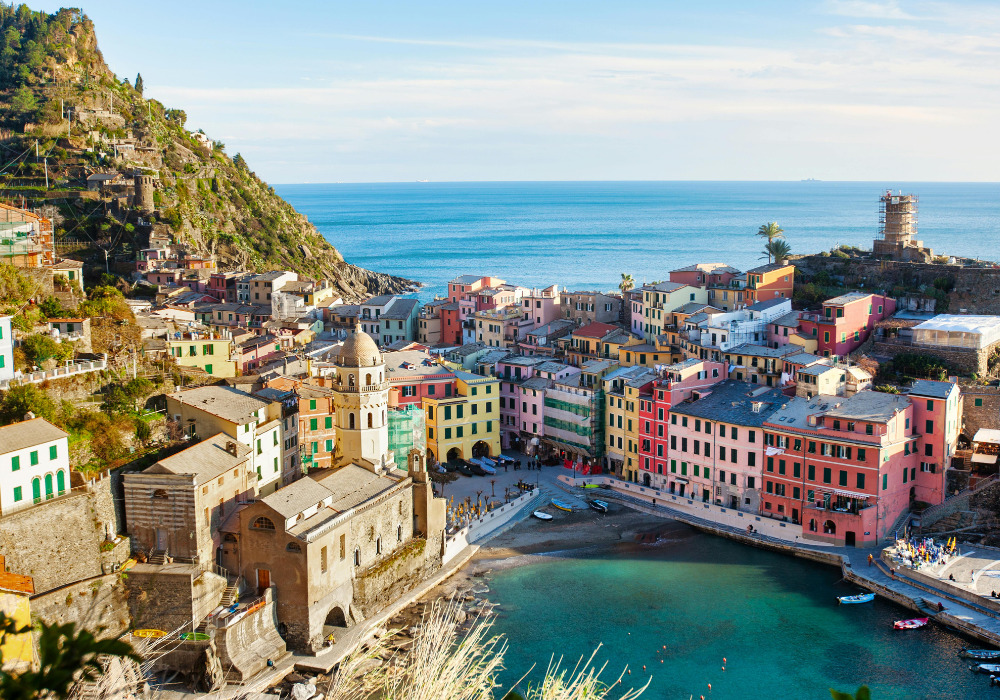
5. Italy
Best for: lifestyle and culture-led movers, retirees, high earners using the flat tax regime
Pros
- Exceptional quality of life, food, and cultural richness, with Southern Italy, Sicily, and Sardinia offering a genuinely low cost of living that is hard to match elsewhere in Western Europe.
- Italy’s flat tax programme (a fixed annual tax on foreign-sourced income) makes it particularly attractive for high earners relocating from the UK.
Cons
- Bureaucracy is complex and residency processes are often lengthy; patience and professional legal support are essential rather than optional.
- English is not widely spoken outside major cities and tourist areas, which means integration is meaningfully slower than in Cyprus, Malta, or Portugal.
Best cities and areas for UK expats
- Milan: Italy’s financial and creative hub, best for working professionals
- Florence: popular with creative and academic expats, compact and walkable
- Rome: capital, large international community, strong European connections
- Bologna: university city, lively, more affordable than the major capitals
- Sicily and Sardinia: preferred by retirees and lifestyle movers, lower overall cost
Read our guide: Moving to Italy from the UK: Your 2026 Relocation Guide

6. Spain
Best for: families, retirees, and lifestyle movers seeking sun, strong expat networks, and good transport links
Pros
- Spain has the largest registered UK expat population in Europe and the infrastructure that comes with it: English-speaking schools, British-friendly services, and well-established expat communities across the Costa del Sol, Barcelona, Madrid, and the Balearics.
- A warm Mediterranean climate across most of the country, good international flight connections, and a cost of living that is meaningfully lower than the UK outside of Madrid and Barcelona.
Cons
- The Non-Lucrative Visa route, the most common residency path for non-working UK nationals, involves significant documentation requirements and processing times that have lengthened in recent years.
- Regional languages such as Catalan, Basque, and Galician are increasingly prominent in some areas, which can add complexity to integration beyond standard Spanish language requirements.
Best cities and areas for UK expats
- Costa del Sol (Marbella, Nerja, Fuengirola): largest concentration of British expats in Spain
- Barcelona: cosmopolitan, creative, strong professional and international community
- Madrid: capital, excellent infrastructure, large international community
- Valencia: increasingly popular, more affordable than Barcelona, good climate
- Mallorca and the Balearics: popular with families and seasonal residents

7. France
Best for: those prioritising quality of life, food culture, healthcare, and proximity to the UK
Pros
- France offers one of Europe’s best public healthcare systems, a rich and varied lifestyle from the Alps to the Riviera, and the shortest travel time to the UK of any destination in this guide.
- The Dordogne, Brittany, and Normandy regions have large and well-established British communities that have existed for decades, providing a softer landing for those moving without strong French language skills.
Cons
- French language proficiency is effectively required for meaningful integration; unlike Portugal or Cyprus, English is not widely spoken outside Paris and major tourist areas.
- France’s tax system is complex and the tax burden for higher earners is significant; professional tax advice before the move is essential rather than optional.
Best cities and areas for UK expats
- Paris: capital, large international community, excellent transport links, high cost of living
- Lyon: second city, excellent food scene, more affordable than Paris
- Bordeaux: popular with lifestyle movers, strong wine region, Atlantic coast
- Provence and the French Riviera: warm climate, high quality of life, popular with retirees
- Dordogne and Brittany: large established British expat presence, rural, lower cost

8. Germany
Best for: professionals, families, and those seeking economic stability and strong public services
Pros
- Germany has one of Europe’s strongest job markets, particularly in engineering, technology, finance, and manufacturing, making it the most commercially attractive European destination for working-age UK professionals.
- Infrastructure, public transport, and public services are excellent, and housing outside Munich and Frankfurt remains more affordable than equivalent UK cities.
Cons
- The language barrier is real and significant; while English is spoken in international business environments, daily life, bureaucracy, and social integration all require German language skills.
- Germany’s administrative and residency bureaucracy is extensive; allow considerably more time and documentation than expected at every stage of the process.
Best cities and areas for UK expats
- Berlin: most international and culturally diverse, large English-speaking expat community, relatively affordable
- Munich: highest quality of life in Germany, strong job market, highest cost of living
- Hamburg: major port city, strong international business community, good lifestyle offering
- Frankfurt: financial hub, very international, excellent UK flight connections
- Dusseldorf and Cologne: large British and international communities, good transport links
Quick comparison: eight European destinations at a glance
Use this table as a starting point, not a final answer. Every figure is an estimate and individual costs vary significantly by area, lifestyle, and personal circumstances.
| Country | Av. rent, 1-bed city centre | English spoken | Visa complexity | Climate | Anglo Pacific service |
| Cyprus | £600 to £900 | Yes | Low | Mediterranean | Removals + shipping |
| Malta | £700 to £1,100 | Yes (official) | Low | Mediterranean | Removals + shipping |
| Switzerland | £1,800 to £2,800 | Partial | Medium | Alpine/temperate | Removals + shipping |
| Portugal | £700 to £1,200 | Partial to yes | Medium | Atlantic/warm | Removals + shipping |
| Italy | £600 to £1,400 | Partial | Medium-high | Varied | Removals + shipping |
| Spain | £700 to £1,300 | Partial | Medium | Mediterranean | Removals + shipping |
| France | £800 to £1,500 | Limited | Medium | Varied | Removals + shipping |
| Germany | £900 to £1,600 | Partial | Medium-high | Temperate | Removals + shipping |
Five things to decide before you choose your destination
- Visa route first. Check whether you actually qualify for residency in your preferred destination before making any financial plans. Eligibility depends on your income, employment status, and savings, and varies significantly by country.
- Run the real numbers. Lower cost-of-living headlines can be misleading. Model your actual income against local costs: rent, private healthcare, regular return flights to the UK, and any tax obligations in both countries.
- Healthcare is non-negotiable. UK nationals lose automatic NHS access when they leave. Every destination in this guide requires either private health insurance or meeting specific residency conditions to access state healthcare. Get a quote before you go.
- Be honest about language. Cyprus and Malta are the only destinations in this guide where English is an official language. Every other country will integrate you faster if you speak the local language, even at a basic level.
- Test before you commit. The 90/180 day Schengen window gives you a useful trial period. Use it. Visit your shortlisted destination for an extended stay before signing a long lease or purchasing property.
Moving your belongings to Europe with Anglo Pacific
Anglo Pacific has been moving UK families and individuals to European destinations for over 40 years. Whether you are moving a full household or a carefully chosen selection of personal effects, the process starts with a home survey to assess what you are taking, followed by professional packing and road freight direct to your new door.
For most European moves, groupage is the most cost-effective option. Rather than paying for a full container, your belongings travel alongside other consignments on a regular European service, with transit times of typically 5 to 10 business days to Southern European destinations and 2 to 5 business days to Northern and Western Europe.
One important practical note: EU countries now require full customs documentation for personal effects arriving from the UK. Anglo Pacific handles the paperwork on your behalf, but you will need to provide a detailed inventory of your shipment before departure. Your move coordinator will walk you through exactly what is needed.
Get a free quote for your European removal: anglopacific.co.uk
Frequently asked questions
Can UK citizens still move to Europe after Brexit?
Yes, UK citizens can still move to any European country, but they can no longer rely on freedom of movement to do so. Each country has its own national visa or residency permit process that UK nationals must follow for stays beyond 90 days. Requirements, costs, and processing times vary significantly by destination.
Which European country is easiest for UK nationals to get residency in?
Portugal, Malta, and Cyprus have historically offered the most accessible residency routes for UK nationals. Portugal’s D7 passive income visa and Malta’s residency programme are both well-established and relatively straightforward for retirees and those with sufficient savings. Cyprus, being outside the Schengen area, operates different rules that are also generally accessible.
What is the 90/180 day Schengen rule?
UK passport holders can spend up to 90 days in any 180-day period within the Schengen area without a visa. This means you can visit, but you cannot reside. Once you reach 90 days, you must leave and cannot re-enter until your 180-day window resets. This applies to the EU Schengen zone collectively, not per country individually.
Do I need a visa to retire to Portugal, Spain, or Italy?
Yes. All three countries require a long-stay visa for UK nationals who wish to retire there. Portugal offers the D7 passive income visa, Spain has the Non-Lucrative Visa, and Italy has a similar elective residency visa. Each requires proof of sufficient income or savings to support yourself without working locally. Processing times and documentation requirements differ, so check with the relevant embassy or a licensed immigration adviser.
Which European country has the lowest cost of living for UK expats?
Among the destinations in this guide, Southern Italy, Portugal outside Lisbon, and Cyprus generally offer the lowest day-to-day costs relative to the UK. Malta has become more expensive in recent years. Switzerland is consistently the most expensive European country to live in. Costs vary significantly by city, lifestyle, and whether you are renting or have purchased property.
How do I move my furniture and belongings to Europe from the UK?
Anglo Pacific offers international removal services to European destinations, including home surveys, professional packing, and road freight direct to your door. For most moves, groupage is the most cost-effective option. You can get a free quote at anglopacific.co.uk.
How long does shipping from the UK to Europe take?
Road freight transit times are typically 2 to 5 business days to Northern and Western European destinations and 5 to 10 business days to Southern Europe. Times can vary depending on the specific destination, the time of year, and customs clearance requirements. Your Anglo Pacific move coordinator will give you a more precise estimate based on your destination.
Which European countries have the largest British expat communities?
Spain has the largest registered UK expat population in Europe, with an estimated 300,000 UK nationals. France, Germany, Ireland, and Cyprus also have significant established British communities. Portugal’s Algarve and Malta have smaller but very visible British expat populations relative to their overall size.


