


Moving to Malta from the UK: A Relocation Guide for 2026
Malta offers a rare combination for British movers. It is an EU member in the Mediterranean, English is one of its official languages, the sun shines for much of the year and the historic ties to the UK make daily life feel familiar quickly. What has changed is the paperwork. Since Brexit, a UK passport no longer carries the right to live in Malta, so the move now begins with the right residence route and a clear view of what life and money look like once you arrive.
This guide walks you through the routes that are open in 2026, the realistic costs, the paperwork and the practical sequence that will help you plan your move from your UK front door to a Maltese one. Where the rules are detailed, we point you to the official Maltese and UK government sources so you can check the live position before you commit.
Why so many UK residents are moving to Malta
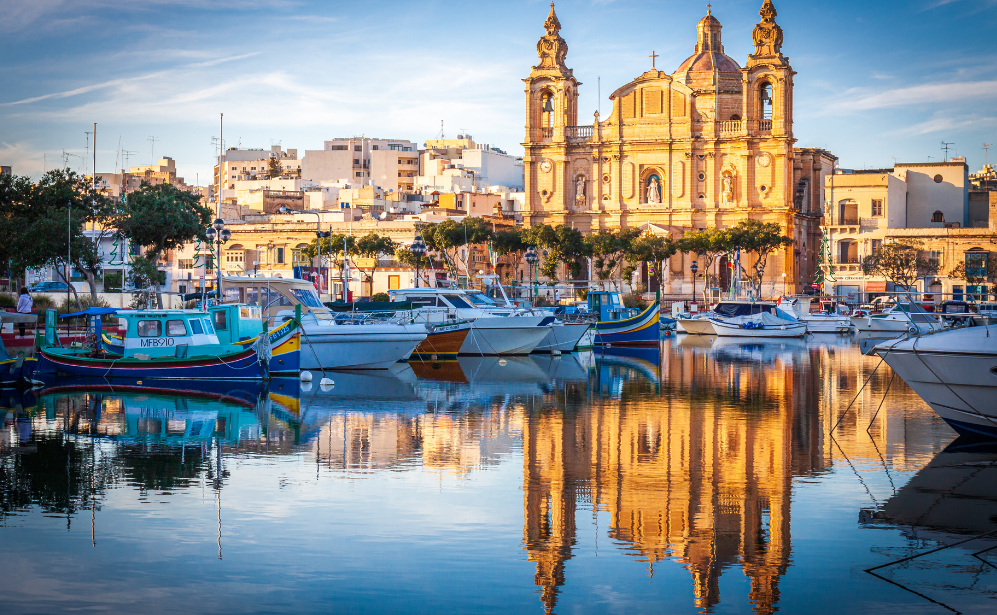
Three things draw UK movers to Malta. The first is language and familiarity. With English an official language, official processes, healthcare and everyday life are far easier to navigate than in many EU destinations. The second is lifestyle. A warm climate, a safe and walkable island, a strong food and social scene and easy connections around Europe make settling in quick. The third is opportunity, with active sectors in finance, technology, gaming, tourism and professional services, and a residence-and-domicile tax framework that can be attractive with the right advice.
None of this means Malta suits everyone. The islands are small and can feel busy in peak season, housing in the most popular districts has risen in recent years, and summers are hot. As always, the right move starts with understanding both sides honestly.
Can you move to Malta from the UK?
Yes. UK passport holders can visit the Schengen Area, including Malta, without a visa for up to 90 days in any 180-day period, but living there means holding the right residence permit. There is no single route. The one that fits you depends on whether you are taking a job with a Maltese employer, working remotely, living on your own means, or applying through a structured residence programme.
It is worth noting that Malta’s investor citizenship route came under a European Court of Justice ruling in April 2025, so Malta is best approached as a residence and lifestyle destination built on genuine connection and lawful residence rather than a citizenship-by-investment plan. The routes below are the residence pathways UK movers use today.
Residence routes for UK movers
| Route | Best for | Key requirement | Notes |
|---|---|---|---|
| Single Permit | Employees with a Maltese job offer | A confirmed job with a Maltese employer, who leads the application | Combines work and residence in one permit |
| Key Employee Initiative | Senior, technical and specialist roles | A managerial or highly skilled role above the published salary level | Fast-track processing for eligible roles |
| Nomad Residence Permit | Remote workers and freelancers | Remote work for non-Maltese clients or employers above the income threshold | Renewable up to four years, not a route to permanent residence |
| Ordinary Residence | Self-sufficient movers and the self-employed | Employment, self-employment or proof of self-sufficiency plus health cover | The standard long-term residence route |
| Malta Permanent Residence Programme | Movers seeking a structured, investment-based route | Meets the programme’s property and contribution conditions | Administered via licensed agents |
| Family Reunification | Joining a resident family member | Sponsorship by a resident who meets the conditions | Tied to the sponsor’s status |
Working in Malta: Single Permit and Key Employee Initiative
If a Maltese employer wants to hire you, the Single Permit combines your right to work and to reside in one application, and the employer leads much of the process once you accept the offer. For senior, technical or specialist roles above the published salary level, the Key Employee Initiative offers faster processing, which is why it is common in finance, technology and gaming. Malta’s English-language administration makes these routes feel more straightforward than in many EU countries.
Nomad Residence Permit
Administered by Residency Malta, this route is for remote workers and freelancers who earn their living from clients or employers outside Malta. You show your remote work, a qualifying income above the published threshold and health cover. The permit is issued for a year and can be renewed towards a total of four years, and it comes with a favourable tax treatment on qualifying income. It does not lead to permanent residence, so many people use it as a flexible base while they decide on a longer-term plan.
Ordinary residence and structured programmes
If you are moving on your own means, taking up self-employment, or want a structured route, ordinary residence is the standard long-term path, based on employment, self-employment or proof of self-sufficiency with health cover. The Malta Permanent Residence Programme offers a structured, investment-based option through licensed agents for those who qualify. Each route has its own conditions, so confirm the current requirements before you apply.
Verify your residence route before you commit
Income thresholds, supporting documents and processing times are set by the Maltese authorities and updated periodically. Malta’s investor citizenship route was subject to a European Court of Justice ruling in April 2025, so plan a residence-first move.
Before you book a removal, sign a lease or hand in your notice, confirm the current rules through Residency Malta and Identita and the UK government’s living in Malta guide. This guide is for information only and is not legal or immigration advice.
Tax in Malta: what UK movers need to know
Malta taxes income on a progressive scale, and it operates a residence-and-domicile system under which how foreign income and gains are taxed can depend on whether they are brought into Malta. Several structured programmes offer defined tax treatment for those who qualify, and the Nomad Residence Permit carries a favourable rate on qualifying income. Value added tax applies to most goods and services. The UK and Malta have a double taxation agreement designed to stop the same income being taxed twice.
Because the residence-and-domicile rules reward careful planning, it is worth structuring foreign income, gains and remittances before your Maltese residence begins. Until you are UK non-resident under the Statutory Residence Test, HMRC may still tax some of your worldwide income, so plan your departure and final UK tax year with a cross-border accountant.
How much does it cost to move to Malta from the UK?
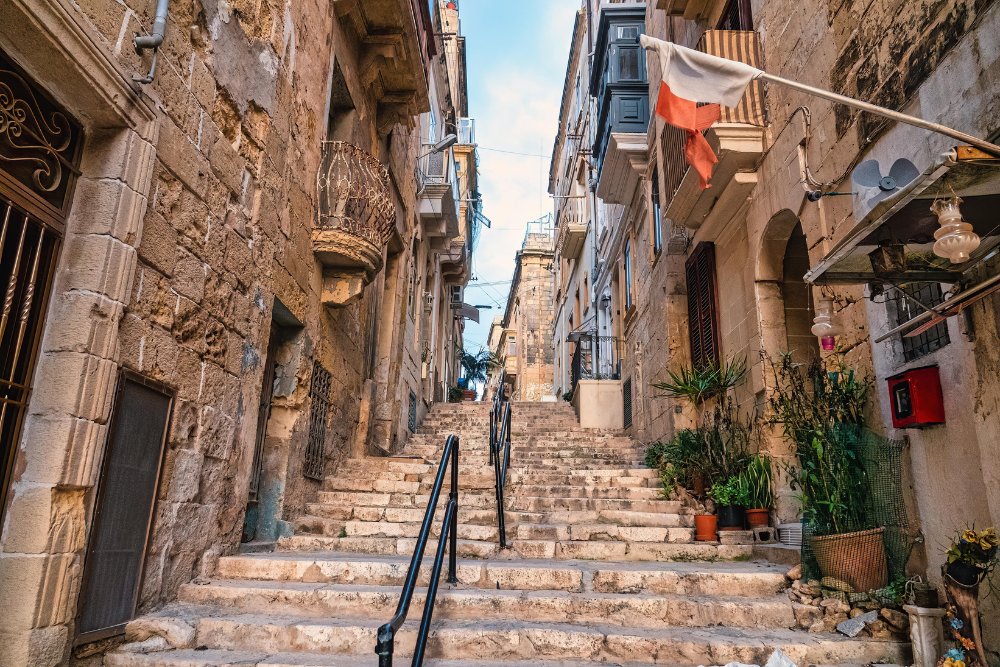
Costs vary with household size and how much you ship. As a planning baseline, most UK to Malta moves fall into one of three brackets: a light move of a few boxes and essentials; a partial home shipped as shared space; and a full household in a dedicated load. Add flights, your first rent and deposit, health cover and a sensible contingency for the early weeks.
Because Malta is an island, moves from the UK combine a road leg through Europe with a sea crossing, so transit takes a little longer than a mainland move and is worth planning around. A dedicated load usually suits a full home, while Groupage, where your belongings share space on a scheduled service, is the more economical choice for a partial move. For a few items you need quickly, baggage shipping covers the gap. Our shipping to Malta page has the detail, and our baggage shipping service is often the right starting point for movers travelling light.
On currency, even a small swing in the GBP to EUR rate moves real money on a deposit or the first months of rent. Anglo Pacific’s dedicated currency partner since 2004 is Halo Financial, who can talk you through timing and options for one-off and recurring transfers. As with everything financial here, this is information rather than advice.
A practical 9-month plan
- Confirm your route. Single Permit, Key Employee Initiative, Nomad Residence Permit, ordinary residence or a structured programme, the route shapes every other decision.
- Gather your documents, including proof of income or funds, health cover and a clean police conduct certificate.
- Speak to a cross-border accountant about your UK tax exit, Maltese residence and any continuing UK income.
- Apply through the right channel. Employer-led for a Single Permit, Residency Malta for the Nomad Permit, or a licensed agent for a structured programme.
- Get a removals quote and survey. A proper survey, in person or by video, gives you a quote that lands close to the final invoice.
- Sort housing. A short-term let while you learn the islands is sensible before you sign a longer lease.
- Notify HMRC, your council, your bank, your pension provider, your GP and the DVLA. The HMRC form is the P85.
- Book the move, allowing for the combined road and sea transit to the islands.
- On arrival, complete your biometrics and collect your residence card, and open a Maltese bank account.
- Exchange your UK driving licence under the current arrangements and settle into local life.
Pros and cons of living in Malta
| Pros | Things to weigh up |
|---|---|
| ✓ English is an official language, easing daily life and admin | • The islands are small and busy in peak season |
| ✓ EU residence with Schengen access | • Housing in popular districts has risen in recent years |
| ✓ Warm climate and a safe, walkable island | • Summers are hot |
| ✓ Active sectors in finance, technology and gaming | • Tax planning rewards early, careful advice |
| ✓ Strong food, history and social scene | • Island shipping adds a sea leg and time |
| ✓ A residence-and-domicile tax framework that can suit planning | • The Nomad Permit does not lead to permanent residence |
Where in Malta should you live?
Malta packs a lot into a small space, so the right base depends on your priorities. Sliema and St Julian’s are lively, well-connected and popular with international residents, though among the pricier options. Valletta offers historic city living. Quieter towns across the main island tend to offer better value, and Gozo suits people wanting a slower, greener pace with a short ferry to the main island.
Frequently asked questions
1. Do UK citizens need a visa to move to Malta?
You can visit visa-free for up to 90 days in any 180-day period, but living in Malta requires a residence permit. The main routes are the Single Permit, the Key Employee Initiative, the Nomad Residence Permit, ordinary residence and structured residence programmes. Each has its own thresholds and documents.
2. Is English widely spoken in Malta?
Yes. English is one of Malta’s two official languages, which makes official processes, healthcare and everyday life notably easier for UK movers than in many other EU destinations. Maltese is the other official language and is widely spoken alongside it.
3. Can I work remotely from Malta for a UK employer?
Yes, on the right route. The Nomad Residence Permit is designed for remote workers and freelancers earning from outside Malta, provided you meet the income threshold and hold health cover. It is renewable towards four years but does not lead to permanent residence.
4. Can I get Maltese citizenship by investment?
Malta’s investor citizenship route was subject to a European Court of Justice ruling in April 2025, so Malta is best approached as a residence and lifestyle destination rather than a citizenship-by-investment plan. Structured residence programmes remain available for those who qualify.
5. How much money do I need to move to Malta?
Plan for your moving costs, flights, first rent and deposit, health cover and a contingency, plus proof of income or funds if your route requires it. Costs scale with household size and how much you ship, and island transit adds a little time.
6. What is the best way to ship my belongings to Malta?
Because Malta is an island, moves combine a road leg through Europe with a sea crossing. A dedicated load usually suits a full home, while Groupage shares space on a scheduled service at a lower cost. For a few items you need quickly, baggage shipping covers the gap. A free survey is the best way to decide.
7. How long does it take to move from the UK to Malta?
A realistic end-to-end timeline is a few months from serious decision to arriving with your belongings, driven mainly by residence processing. Combined road and sea transit takes a little longer than a mainland move, and indicative timings are confirmed at survey.
The final word
Malta rewards movers who arrive informed. The English-language ease, the EU residence and the Mediterranean lifestyle are real, and they work best when paired with a clean UK tax exit, the right residence route from the start and a household that has been right-sized for the journey. Get those three things right and the rest tends to follow.
If you would like a free survey for your move to Malta, the team at Anglo Pacific has been shipping British homes overseas for more than forty years and would be glad to walk you through your options. You can request a quote on our shipping to Malta page or speak to us about international removals more broadly.


